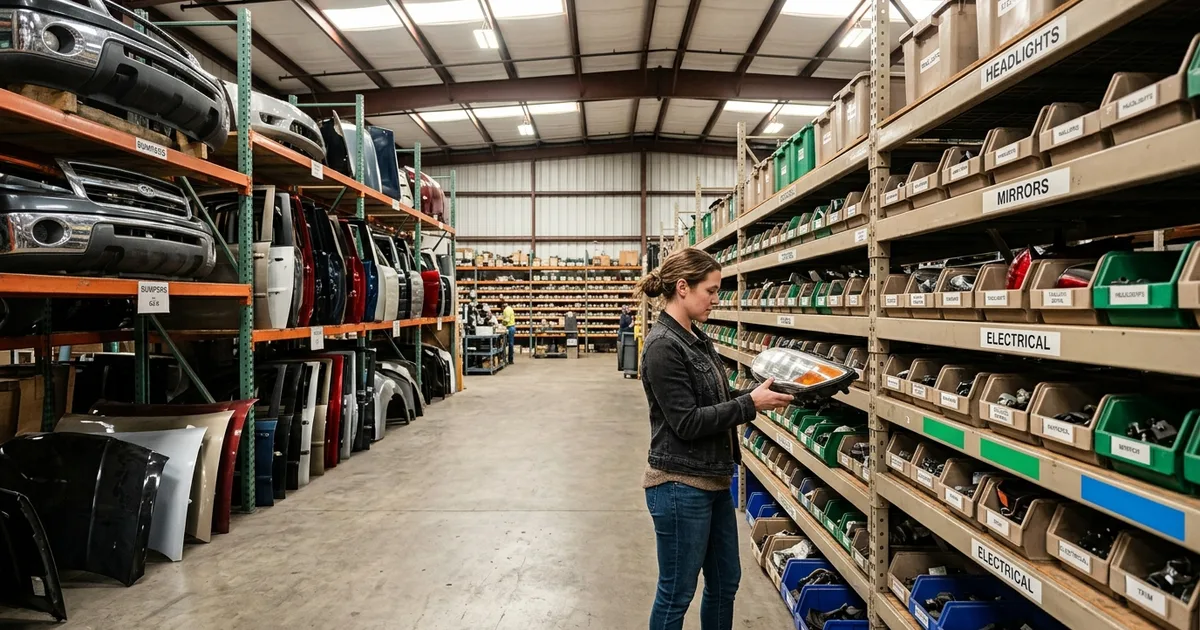
If you need a used auto part and you want the best balance of price, speed, and reliability, your answer depends on who you are. Repair shops buying 20+ parts a week should be on a voice hotline network or running Car-Part.com searches in bulk. Individual car owners doing a weekend fix will get the most from eBay Motors or a local pull-a-part lot. Dismantlers sourcing from each other need a live network like Hotline HQ where 500+ yards hear the request at the same time.
There is no single best place to buy used auto parts. There are eight solid channels, each with different strengths. This guide walks through all of them — local junkyards, Car-Part.com, eBay Motors, Facebook Marketplace, voice hotlines, LKQ retail, RockAuto, and Amazon — and compares them on pricing, speed, reliability, and return policies so you can pick the right mix for your situation. For a deeper look at how to search for specific parts across these channels, see our complete guide to finding used auto parts online.
Key TakeawaysDisclosure: This guide is published by Hotline HQ, which operates a voice parts network for auto recyclers. We cover every major buying channel honestly, including our competitors. Where we mention Hotline HQ, we identify it clearly.
- Eight major channels exist for buying used auto parts, each suited to different buyer types and budgets
- Self-service junkyards offer the lowest prices (40-70% below retail salvage) but require your time and tools
- Car-Part.com indexes 200M+ parts and is the widest online search, though listings can be stale
- Voice hotlines like Hotline HQ deliver confirmed-available parts with live pricing from 500+ yards in seconds
- Always verify fitment by OEM part number, year/make/model/trim, and interchange database before buying
- Combine two or three channels to cover both common and hard-to-find parts
Best Options by Buyer Type
Not every buyer needs the same channel. Here is the short version:
Repair shops and body shops running through parts daily need speed and confirmed availability. A voice hotline (Hotline HQ) or Car-Part.com gives you both. The hotline gets you a live answer and a price in seconds. Car-Part.com lets you compare listings across hundreds of yards at once. Individual car owners doing a one-time repair care most about price and return protection. eBay Motors and Amazon offer buyer-protection programs. Local pull-a-part lots deliver the lowest possible price if you're willing to pull it yourself. Dismantlers and yard operators sourcing inventory from other yards need a peer network. Hotline HQ's voice rooms connect you with 500+ yards simultaneously — you key up, describe the part, and yards with it respond in real time. That peer-to-peer dynamic doesn't exist on eBay or Amazon. See how auto parts hotlines work for a deeper look at the mechanics.Local Junkyards and Self-Service Yards
Self-service junkyards — also called pull-a-part lots or U-Pull-It yards — remain the cheapest place to buy used auto parts in the country. You pay a small entry fee (typically $2 to $5), walk the rows, find your vehicle match, and pull the part yourself. Pricing runs 40% to 70% below what a full-service yard charges for the same part.
How it works
You show up with your own tools. The yard has rows of vehicles organized roughly by make or section. You find a matching vehicle, unbolt the part, bring it to the counter, and pay the posted price. Most self-service yards use flat-rate pricing boards — a door is one price, an alternator is another, regardless of make or model.
Pricing
Self-service yards are hard to beat on price. An alternator might run $25 to $40. A door assembly, $50 to $100. Engines and transmissions are priced higher but still well below full-service salvage pricing. For a breakdown of typical pricing across part categories, see our used auto parts pricing guide.
Speed and reliability
Speed depends entirely on your own hustle. If the part is in the yard, you walk out with it in an hour. If it's not, you've burned a trip. There is no way to check inventory remotely at most self-service lots. Reliability is as-is — you inspect it yourself, and there's no guarantee it works until you install it.
Return policy
Most self-service yards sell everything as-is, no returns. A few larger chains like LKQ Pick Your Part offer limited exchange windows (typically 30 days with receipt), but that's the exception.
Best for: Budget-conscious DIY owners, shops needing common body panels, and anyone who doesn't mind wrenching in a yard for an hour.Car-Part.com
Car-Part.com is the largest online salvage parts database in North America, indexing over 200 million parts from thousands of recyclers (Car-Part.com, 2025). If a part exists in a participating yard's inventory system, it shows up here. For most people searching "used auto parts online," this is where they start.
How it works
Enter the year, make, model, and part name. The system returns matching listings from yards that have uploaded that part to their inventory management software. Each listing shows the yard name, location, price, mileage (when available), and sometimes a photo. You then call or email the yard to confirm availability and arrange purchase or shipping.
Pricing
Prices are set by each individual yard. You'll see a range of quotes for the same part from different sellers. This is useful for comparison shopping, but it also means you need to factor in shipping costs when buying from yards outside your area.
Speed and reliability
Search results appear instantly. The lag is in confirmation — a part listed on Car-Part.com may have been sold since the last inventory sync. Some yards update daily; others sync weekly or less. You won't know the part is actually available until you contact the yard. For hard-to-find parts, this step can eat time if your first three results are already sold.
Return policy
Return policies are set by each yard individually. Most full-service recyclers offer 30- to 90-day warranties on major mechanical parts (engines, transmissions) and shorter windows or no returns on body and electrical parts. Always ask before buying.
Best for: Shops and individuals searching for specific parts across a wide geographic area. The broadest net you can cast online.eBay Motors
eBay Motors carries a massive volume of used auto parts from salvage yards, individual sellers, and parts resellers. It works well for both common and obscure parts because the seller base includes professional recyclers alongside individual car owners parting out vehicles.
How it works
Search by year, make, model, and part name — or by OEM part number for precision. Filter by condition (used, refurbished, new aftermarket), price range, and seller location. Most listings include photos, condition notes, and compatibility charts. You buy online and the part ships to you.
Pricing
eBay pricing is competitive because sellers undercut each other. You'll often find parts priced 20% to 40% below a local yard's asking price, especially for common components. Shipping adds cost, though — a $60 fender can carry $40 in freight. Watch the total landed price, not just the part price.
Speed and reliability
Shipping times vary from 2 to 10 business days depending on the seller and part size. Reliability depends on the seller's reputation. Check the feedback score and read recent reviews. Established sellers with thousands of transactions are generally safe. New sellers with thin histories carry more risk.
Return policy
eBay's Money Back Guarantee covers most transactions. If the part doesn't match the listing description or arrives damaged, you can return it. Some sellers also accept returns for fitment issues. This buyer protection is a real advantage over buying from a yard with no return policy.
Best for: Individual car owners who want buyer protection, comparison shopping, and shipping to their door. Also useful for shops sourcing rare or discontinued parts.Facebook Marketplace
Facebook Marketplace and Facebook groups dedicated to auto parts have become a significant channel for buying used parts. The platform works best for local transactions — you search your area, find a seller, and meet up or arrange local delivery.
How it works
Search "used auto parts" plus your make and model, or join regional auto parts groups. Sellers post photos and prices. You message them, negotiate, and arrange pickup or meet. Some groups specialize in specific makes (Ford trucks, Honda Civic parts, etc.) and have active communities.
Pricing
Prices are all over the map. You'll find deals well below yard pricing from individuals parting out a vehicle who just want the car off their property. You'll also find delusional pricing from people who think their rusted fender is worth retail. Negotiation is expected.
Speed and reliability
Speed is fast for local deals — you can have the part the same day. Reliability is the weak spot. There's no standardized condition grading, no buyer protection, and no recourse if the part is bad. You're trusting photos and the seller's word.
Return policy
None. This is a private sale. Once you pay and take the part, it's yours. Some sellers will work with you if there's an obvious problem, but there's no formal process.
Best for: Local bargain hunters, people parting out specific vehicles, and anyone who doesn't mind spending time scrolling and messaging. Poor choice for shops that need consistent supply.Voice Hotlines (Hotline HQ)
Voice hotlines are the fastest way to source a used part with confirmed availability and a live price. The Hotline HQ network connects over 500 salvage yards across the US in regional voice rooms. You describe the part you need into the room, and every yard on the line hears it simultaneously. Yards with the part respond immediately with pricing.
How it works
Yards join regional rooms organized by geography. When you need a part, you key up (like a two-way radio) and broadcast your request: "Need a 2019 Camry driver fender, any color." Every yard in the room hears it. If a yard has the part, they respond with a price and condition on the spot. Average response time is roughly 2 seconds. There are no search forms, no inventory databases to check — it's a live, real-time conversation between recyclers.
For the full breakdown of the mechanics, see our guide on how auto parts hotlines work.
Pricing
Pricing is yard-to-yard, negotiated live on the call. Because multiple yards may respond to the same broadcast, natural price competition happens in real time. You hear three or four offers and pick the best one. There is no Hotline HQ markup or commission on the parts transaction. The yard sells to you directly.
For context on what parts cost across the industry, check the used auto parts pricing guide.
Speed and reliability
This is where voice hotlines pull ahead. Speed is measured in seconds, not hours or days. And because a live person at the yard confirms the part exists right now, you avoid the stale-listing problem that plagues database searches. The part hasn't been sold out from under you — the yard just told you they have it.
Return policy
Return policies are between you and the selling yard. Most professional recyclers on the network offer standard 30- to 90-day warranties on engines and transmissions. Hotline HQ doesn't handle the transaction, so warranty terms are set by the yard.
Best for: Repair shops, body shops, and dismantlers who source parts daily. The speed and confirmed availability make it the primary channel for high-volume buyers. Individual car owners can benefit too, but the subscription model is designed for professional use.LKQ Pick Your Part and Retail Locations
LKQ Corporation is the largest auto parts recycler in North America, operating both self-service (Pick Your Part) and full-service retail locations. Their scale means broad inventory and standardized processes — something smaller independent yards can't always match.
How it works
Pick Your Part locations are self-service. You search their online inventory tool to see which vehicles are currently in the yard, then show up, pull the part, and pay at the counter. Their website shows vehicle arrival dates, which helps you gauge whether the good parts have already been picked over. Full-service retail locations pull, test, and warehouse parts. You call or search online, they confirm availability, and you buy over the phone or in person. These locations ship nationwide.Pricing
Pick Your Part pricing follows flat-rate boards — the same price for an alternator whether it comes from a Civic or a Cadillac. Full-service locations price by part and vehicle, typically at standard salvage retail rates. LKQ's scale doesn't always translate to lower prices, but their inventory depth means they often have the part when smaller yards don't.
Speed and reliability
The online vehicle inventory check for self-service locations is a genuine advantage — you can confirm a matching vehicle is in the yard before driving out. Full-service locations test major mechanical components, which adds a layer of reliability you won't get from a random eBay seller.
Return policy
LKQ Pick Your Part offers a 30-day exchange policy on most parts (with receipt). Full-service locations typically offer 30- to 90-day warranties depending on the part category. By recycler standards, their warranty program is among the most consistent.
Best for: Buyers near an LKQ location who want the convenience of a large chain with standardized pricing and return policies. Self-service for budget buyers, full-service for shops that want tested parts.RockAuto
RockAuto is not a salvage parts source. It is an online retailer of new OEM and aftermarket replacement parts. It's included here because many people searching for "where to buy auto parts" consider it alongside used sources, and it's worth understanding where it fits.
How it works
RockAuto operates a massive online catalog organized by year, make, model, and part category. You search, add to cart, and check out. Parts ship from warehouses across the US. The catalog covers everything from oil filters to complete engines, with multiple brands at different price points for each part.
Pricing
RockAuto is consistently among the cheapest sources for new aftermarket parts. Prices often undercut local auto parts stores by 30% to 50%. However, new aftermarket is still more expensive than used OEM salvage for most major components. A new aftermarket headlight assembly might cost $80 on RockAuto vs. $40 for a used OEM unit from a salvage yard.
Speed and reliability
Shipping times run 3 to 7 business days depending on warehouse location and shipping method. Parts are new, so reliability is high — you're not gambling on unknown history. The trade-off is cost.
Return policy
RockAuto accepts returns within 30 days for most parts. Electrical parts and special-order items may be excluded. Return shipping is the buyer's responsibility.
Best for: Buyers who want new parts at the lowest possible price. Not a used parts source, but a practical alternative when the cost difference between new aftermarket and used OEM is small (wear items, filters, gaskets, brake components).Amazon Used and Refurbished Parts
Amazon's auto parts section includes a growing selection of used, refurbished, and remanufactured components alongside new parts. The "Amazon Renewed" program covers some auto parts, and third-party sellers list used OEM pulls.
How it works
Search Amazon by part name, OEM number, or vehicle fitment. Filter by condition (new, used, renewed/refurbished). Third-party sellers handle fulfillment, though some use Fulfillment by Amazon (FBA) for faster shipping. Fitment accuracy depends on the seller's listing quality — always double-check compatibility.
Pricing
Pricing is competitive on common parts. Amazon's marketplace pressure keeps prices in check. However, the used auto parts selection is thinner than eBay's, and many listings are actually new aftermarket parts rather than genuine used OEM.
Speed and reliability
Prime-eligible parts ship in 1 to 2 days. Non-Prime listings vary. Amazon's A-to-Z Guarantee provides buyer protection similar to eBay's. Reliability of used parts depends entirely on the third-party seller.
Return policy
Amazon's standard return policy applies — most parts can be returned within 30 days. Amazon Renewed parts carry a separate guarantee. This makes Amazon a lower-risk option for used parts compared to Facebook Marketplace or direct yard purchases.
Best for: Buyers who already have Amazon Prime and want fast shipping with strong buyer protection. Selection is limited compared to eBay or Car-Part.com for used salvage parts.OEM vs Aftermarket vs Salvage: Which Should You Buy?
Three categories of replacement parts exist, and choosing the right one depends on the component, your budget, and how long you need it to last.
OEM (Original Equipment Manufacturer)
OEM parts are made by the same manufacturer that supplied the part to the automaker. A new OEM headlight for a 2020 Camry is the same part Toyota installed at the factory. New OEM is the most expensive option — often 2x to 4x the aftermarket price.
Used OEM parts from salvage yards offer the same fit and quality at 50% to 75% below new OEM pricing. This is the sweet spot for major components like engines, transmissions, doors, fenders, and headlights. The part was designed for your exact vehicle. It just has miles on it.Aftermarket
Aftermarket parts are manufactured by third-party companies to fit the same application. Quality ranges widely — from budget brands with loose tolerances to premium brands that match or exceed OEM specs. Pricing sits between used OEM and new OEM.
Aftermarket works well for wear items: brake pads, rotors, filters, belts, hoses, spark plugs. For body panels, fit-and-finish can vary. A cheap aftermarket fender might need extra adjustment to align properly. For mechanical internals (engine gaskets, suspension bushings), reputable aftermarket brands like Moog, Dorman, and Denso deliver solid quality.
Salvage (used OEM from a recycler)
Salvage parts are used OEM components pulled from end-of-life vehicles by licensed auto recyclers. The part is genuine OEM — it just came off a wrecked or retired car. Salvage pricing typically runs 50% to 75% below new OEM.
The risk with salvage is unknown history. A transmission from a car with 120,000 miles has 120,000 miles of wear. Reputable recyclers test major mechanical parts and offer warranties. Less reputable ones sell as-is. Always ask about mileage, testing, and warranty before buying mechanical salvage parts.
For the parts in highest demand from salvage yards, see which parts dismantlers request most.
The rule of thumb: Use salvage OEM for major components (engines, transmissions, body panels, glass, lights). Use aftermarket for wear items and maintenance parts. Use new OEM only when no suitable alternative exists — or when the repair is on a newer vehicle still under factory warranty.How to Verify Fitment and Avoid Bad Buys
Buying the wrong part wastes money and time. These steps reduce that risk significantly.
Match by OEM part number
Every major component has a part number stamped, etched, or printed on a label. Before you search anywhere, find the OEM part number for the part you need. Check the existing part on your vehicle, look it up in an OEM parts catalog (most manufacturer websites offer free lookup by VIN), or use a resource like RealOEM for BMW or Toyota's parts catalog.
When you find a listing, ask the seller for the part number on the unit they're selling. If the numbers match, fitment is confirmed. This is the single most reliable way to avoid buying the wrong part.
Use interchange databases
Not every matching part shares the same part number. Automakers often use the same component across multiple model years or across different models. Interchange databases like Hollander (used by most professional recyclers) and Car-Part.com's interchange lookup tell you which parts from other vehicles will fit yours.
For example, a 2018 Camry headlight might interchange with 2019 and 2020 model years. The interchange database confirms this compatibility. Without it, you're guessing.
Verify year, make, model, and trim
Trim level matters more than most buyers realize. A base-model Accord and an EX-L Accord may use different headlights, different bumper covers, different engines. Always specify the full trim level and engine size when requesting or searching for parts.
Inspect photos carefully
For online purchases, request multiple photos from different angles. Look for cracks, chips, corrosion, and mounting tab damage. On mechanical parts, look for oil leaks, corrosion on electrical connectors, and signs of previous repair. If the seller won't send detailed photos, move on.
Ask the right questions
Before buying any used mechanical part, ask:
- What is the mileage on the part (or the donor vehicle)?
- Was the part tested? How?
- Is there a warranty? How long? What does it cover?
- What is the return policy if the part doesn't work?
- Is there a core charge?
These questions separate professional recyclers from fly-by-night sellers. A legitimate yard will answer all of them without hesitation.
Warranty and Return Considerations
Warranty coverage varies dramatically across buying channels. Knowing what you're getting before you pay saves headaches after.
Full-service salvage yards typically offer 30- to 90-day warranties on engines, transmissions, and other major mechanical parts. Some national networks offer extended warranties (up to 6 months or 1 year) for an additional fee. Body parts and electrical components often carry shorter warranties or none at all. Self-service yards sell as-is. You pulled it, you own it. A few chains like LKQ Pick Your Part offer 30-day exchange policies, but most independent pull-a-part lots do not. eBay Motors provides the eBay Money Back Guarantee, which covers parts that don't match the listing description. This is effectively a return policy backed by the platform, not the seller. It's one of the strongest buyer protections available for used parts. Amazon applies its standard 30-day return window to most auto parts, including used and renewed items. The A-to-Z Guarantee adds another layer if the seller doesn't cooperate. Facebook Marketplace offers no buyer protection for local pickup transactions. Once you hand over cash and take the part, your only recourse is the seller's goodwill. Car-Part.com is a search platform, not a seller. Warranty terms depend entirely on the yard you buy from. Always confirm before placing an order. RockAuto accepts returns within 30 days for most new parts. Return shipping is your cost.If warranty matters to you — and for engines and transmissions it absolutely should — buy from a full-service yard with a written warranty, or through eBay or Amazon where platform-level buyer protection exists.
Where to Start
If you made it this far, you know there's no single best answer. The right channel depends on what you're buying, how fast you need it, and how much risk you're willing to accept.
For shops and professional buyers, start with a voice hotline like Hotline HQ for daily sourcing and use Car-Part.com for backup searches on hard-to-find parts. For individual car owners, check eBay Motors first for buyer protection and selection, then hit a local pull-a-part lot if price is the priority. For dismantlers trading with other yards, a voice network is the fastest and most direct path.
Whatever channel you choose, verify fitment before you buy, ask about warranties on mechanical parts, and don't let a low price on a mystery-condition part cost you twice when it fails.
Ready to see what parts are moving right now? Check the most-requested used auto parts on the Hotline HQ network, or search for a part directly.